
Your commercial roof might be hiding more than a few routine maintenance issues. And that’s the problem: they’re hiding. Water intrusion, trapped moisture, and heat loss often go unnoticed until they lead to serious structural problems. That’s why Texas building owners are starting to invest in roof thermal imaging inspections—a non-invasive way to detect hidden issues and reduce long-term costs.
Using thermal imaging to detect roof leaks can save building owners thousands of dollars by identifying problems early, before they demand major roof repairs or full replacements. Here’s what you need to know about one of the best roof inspection services available.
What Is Roof Thermal Imaging?
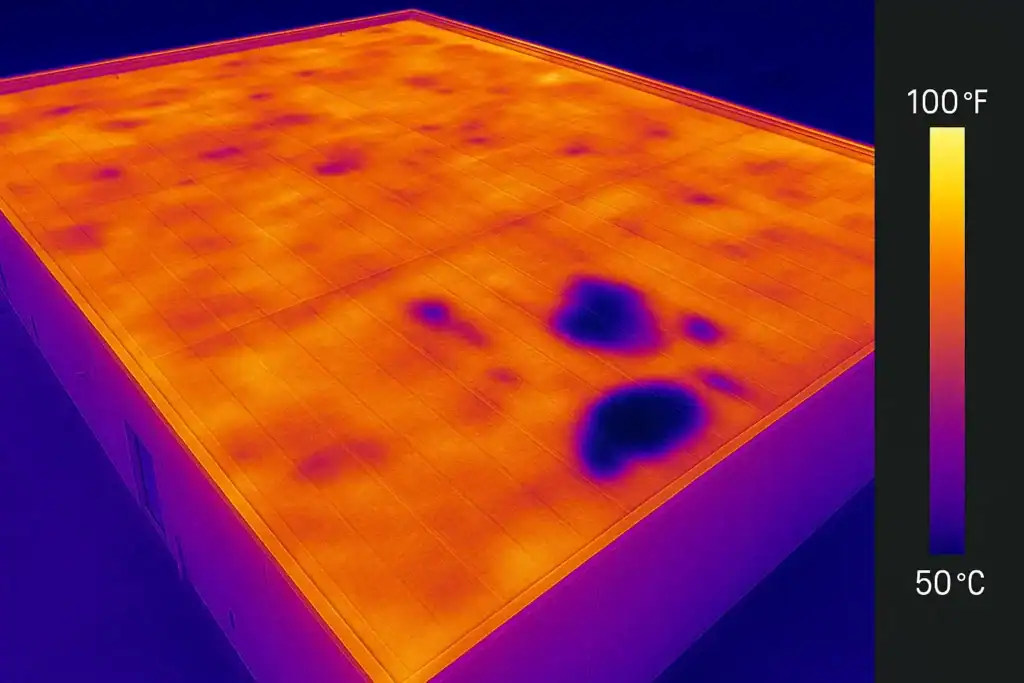
Thermal imaging roof inspection, also known as infrared thermography, uses specialized cameras to detect temperature differences across the roof surface. Temperature variations appear as thermal maps, which clearly show wet areas, dry material, and signs of trapped moisture within your roofing system, as they show up cooler than the surrounding roof area.
Unlike visual inspections, which depend on spotting damage or pooling water and are therefore unable to detect hidden issues, infrared cameras reveal what’s happening beneath the surface. Infrared roof inspections are especially effective on flat roofs, where moisture can linger undetected beneath the membrane or insulation until it causes serious structural or health concerns.
How Infrared Roof Inspections Work
Don’t let those colorful heat maps fool you—the science behind infrared imaging inspections is actually straightforward. During the day, your building absorbs heat from the sun. At night, it releases that heat in a process called radiational cooling. The key is that not all materials cool at the same rate. Wet insulation holds heat longer than dry areas, creating a temperature imbalance.
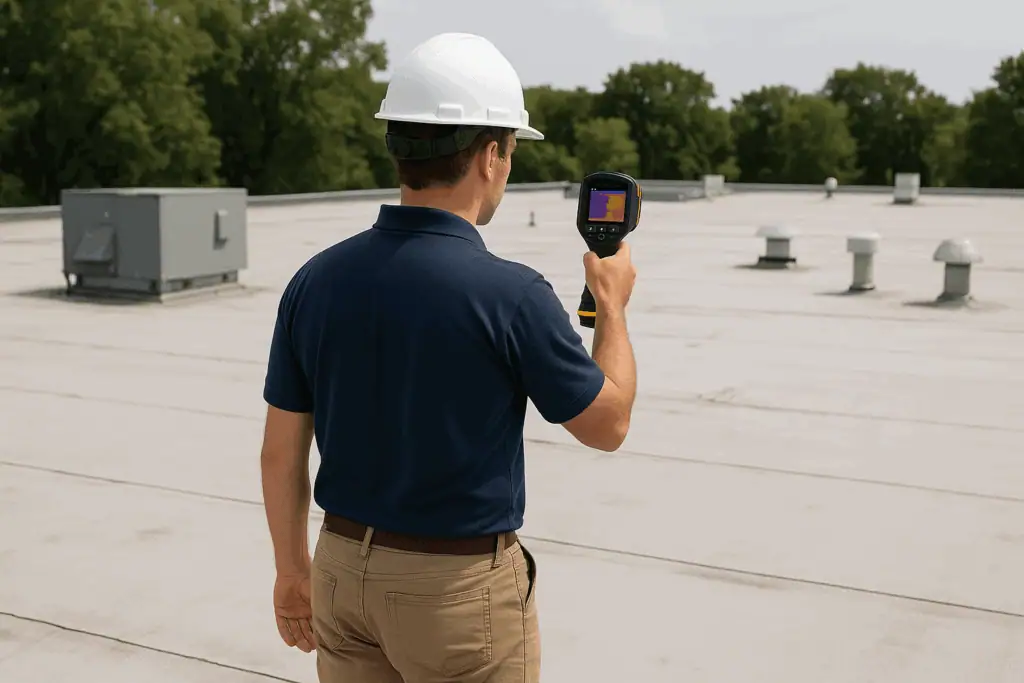
A trained roofing contractor uses a thermal imaging camera to scan the entire roof during this window of temperature change (this can even be performed with drone technology). The result is a highly detailed visual map that highlights where moisture may be present, even if there are no visible signs of a leak from the roof’s surface, helping you identify issues early.
What Can a Thermal Roof Inspection Reveal?
Infrared roof surveys detect more than just leaks. They’re helpful for finding excess moisture under the membrane, pinpointing heat loss that’s driving up energy costs, and even flagging areas of structural damage. By analyzing the thermal inspection data, roofing professionals can advise building owners on targeted, cost-effective roof repairs rather than blanket replacements.
This level of precision is especially valuable for property management companies that oversee multiple buildings or large commercial facilities. Thermal imaging roof inspection helps prioritize projects, document roof conditions, and plan maintenance without disruption.
Why Central Texas Buildings Benefit Most
Roofs in Central Texas endure extreme heat, unpredictable storms, and long stretches of direct sun. All of these conditions make commercial roofs more vulnerable to wear, causing leaks, deterioration, and other damage, making them more likely to hide moisture issues or degraded roofing materials.
Thermal imaging roof inspections provide a clear, data-driven understanding of your roof prior to visible failure. Early evaluation and detection allow building owners to act early, prevent structural problems, and save money on energy by addressing heat loss.
Thermal Imaging vs Traditional Roof Inspections
Standard roof inspections are extremely important, but they rely heavily on experience and the ability to spot surface damage. They’re critical for finding flashing problems and visible surface damage. But they can miss what lies beneath the roofing surface. Infrared thermography offers a deeper look. It’s non-invasive, highly accurate, and significantly faster, making it ideal for large facilities and complex roofing systems.
Better still, it supports smarter decision-making. When paired with tools like a moisture meter, or integrated with a broader preventative maintenance strategy (like visual inspections performed by experienced technicians), infrared roof inspection can be one of the most effective tools for detecting moisture intrusion before it compromises your building envelope.
Protect Your Building with Infrared Roof Inspection
Don’t wait for roof leaks to damage your operations or your bottom line. With the right contractor and the right tools, roof thermal imaging can extend the life of your roof, reduce heating and cooling costs, and keep your facility protected year-round.
If you’re managing a commercial property in Central Texas, now is the time to consider a thermal roof inspection. It’s fast, affordable, and often reveals issues you never knew were there.
Schedule your infrared roof inspection today and take the guesswork out of roofing.